damienxcah231.publishlane.com

Why Hplc Pureness Screening Issues For Research Peptides 2026

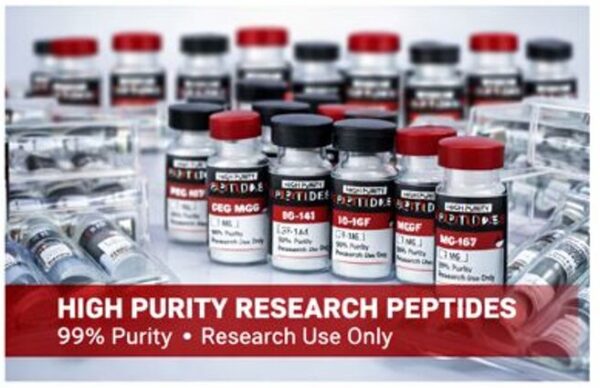
Why Hplc Purity Testing Issues For Study Peptides 2026 This content is not meant as an alternative for professional medical recommendations, medical diagnosis, or treatment. Companion with us for relied on HPLC and MS solutions that guarantee peptide dependability from synthesis Peptide Blends to application. Peptide study is just as strong as the tools behind it-- which begins with testing. HPLC and Mass Spectrometry provide the gold-standard guarantee that what remains in the vial is pure, accurate, and specifically what the tag claims. Validates molecular identification by matching the observed mass to the theoretical mass.

Just how much time does an HPLC examination take?

Time Required for HPLC EDTA Test Reports + Following Actions
When you have scheduled the examination and the phlebotomist has accumulated your blood example, the example is taken to the research laboratory, where the test is executed. It normally takes 24-48 hours for the test record to be created.

How To Create Hplc Technique For Reverse Phase?

  • It does not transform a research study substance right into a professional product, and it does not replace speculative recognition in the scientist's own system.
  • Due to the various polarities of different polypeptides, their elution times on RP-HPLC will certainly also be different, to ensure that the separation of the polypeptides can be attained.
  • A pure peptide will certainly show a single, sharp optimal in the chromatogram, while contaminations or pollutants will appear as added optimals or shoulder peaks.
  • HPLC filtration is carried out by the state-of-art HPLC system with Empower Chromatography Manager.
  • For peptides, HPLC separates all the particles present in an example, revealing whether it's made up of primarily the peptide you want-- or if there are unwanted byproducts left over from synthesis.
Tests like molecular weight resolution (LC-MS) confirm the molecular weight of the peptide. Amino acid series confirmation (MS/MS) confirms that the peptide's sequence is appropriate. MS is especially helpful for discovering contaminations that co-elute (compounds that are not completely separated) during chromatography.

Peptide Study Reference: Reconstitution, Purity, Receptor, And Storage Terms

The target peptide looks like a distinct height, and its location relative to the overall peak location indicates the purity portion. A well-synthesized study peptide normally attains purity degrees of 98% or higher. Contaminated peptides reveal numerous peaks on HPLC chromatograms, molecular weight discrepancies in mass spectrometry, or noticeable particles in remedy. Independent lab testing discovers contamination before products get to scientists. https://rentry.co/259dqc4f Mass spectrometry offers conclusive confirmation of peptide identification by gauging the specific molecular weight of the compound, typically to within 0.01% of the theoretical worth. Once reconstituted in solution, a lot of peptides must be made use of within 30 days when stored at 2-- 8 ° C, or aliquoted and icy for longer-term storage. NMR supplies a good quantity of details pertaining to the framework of peptides. Numerous strategies are used to test peptides, however the specific technique relies on what requires to be reviewed, such as pureness, structure, or stability. Product is provided as a lyophilized reference compound with HPLC purity verification. NorthEast BioLab offers critical insight, and are certified with regulative standards and industry ideal practices. By accessing this content, you acknowledge that you have reviewed and understood this please note. It helps validate that peptide-based medications fulfill the high requirements for safety and performance. Strong Phase Peptide Synthesis (SPPS) is based on sequential enhancement of alpha-amino and side chain safeguarded amino acid residues to an insoluble polymeric support. Quickly, synthesis is done by stepwise addition of activated amino acids to the solid support (Wang resin and PEG-PS) starting from the carboxy terminus to the amino terminus. At the end of the synthesis the peptides were cleaved off the resin by reagent R (90% TFA, 5% Thioanisole, 3% Ethanedithiol, and 2% Anisole) and based on numerous ether extractions.