Peptide Screening: Hplc & Mass Specification Purity Guide Pinnacle
Peptide Quality Control & Purity Testing Boc Scientific Researches
It is an area-percent purity measurement, not a full identification or task examination. Importantly, pureness percentages explain chemical structure just-- they do not suggest sterility or organic suitability. Peptides from Maxed Out Compounds are provided solely for laboratory study use and are not intended for human or veterinary functions. Peptide pureness is generally shared as a percentage, such as 95% or 98%. This figure represents just how much of the sample is made up of the desired peptide series. For the majority of research laboratory applications, a purity of 95% or greater is thought about research-grade.- The chromatographic pureness is after that computed by comparing the area under the major top with the total location under all integrated heights.
- We collaborate with biotech, pharmaceutical, CRO, CDMO, and scholastic teams on peptide chemical and physical analyses that sustain research study and non-clinical decision production.
- The isoelectric factor (specialty) is a vital specification for comprehending peptide solubility and behavior in different settings.
- This degree of detail aids scientists comprehend if any kind of small peptide byproducts are present.
What Can We Offer?
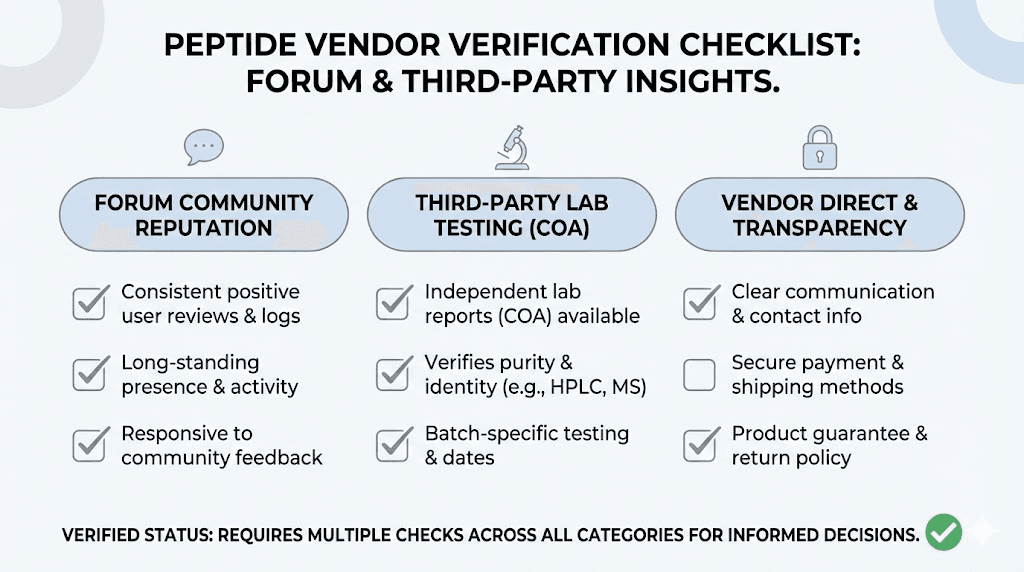
By demanding peptides that feature verification of purity and identification, scientists can considerably lower the danger of speculative artefacts. Conversely, making use of peptides that have passed third-party lab validation assists ensure that the observed experimental impacts are truly due to the desired peptide and not as a result of impurities or errors. When you see peptides promoted as "research-grade," it refers to their planned usage and the level of manufacturing oversight. Research-grade peptides are created research laboratory research use only-- they are not generated under pharmaceutical GMP criteria and are not meant for usage as therapies or in people. These peptides come with a basic quality assurance bundle, typically including HPLC purity evaluation and MS verification of identity, ensuring they satisfy scientific requirements for pureness and make-up.

Significantly, this pureness number is commonly figured out after filtration (e.g. by HPLC) and concentrates on peptide pollutants-- it doesn't count recurring water, salts, or counter-ions in the dried peptide powder. To put it simply, the purity percentage has to do with the make-up of peptide types in the example, not the weight payment of water or salts. A peptide might be 98% pure (implying very couple of peptide pollutants) yet still have some water or trifluoroacetate salt; those non-peptide parts would be reflected in the internet peptide content instead of the pureness percent. At Creative Peptides, we supply custom peptide chemical and physical evaluations for study teams that need reliable data on peptide identity, pureness, make-up, option habits, and sample high quality. Our solution supports artificial, modified, cyclic, conjugated, and hard peptide samples with analytical process built around the real task question rather than a fixed default panel.
Detailed Peptide High Quality Screening Solutions
These are important in the best setting, yet they must be taken method-specific proof instead of a global replacement for HPLC and MS. However peptide purity is perhaps the solitary most important top quality metric for any kind of research peptide. It directly influences the integrity and reproducibility of experimental results. A peptide listed at 75% pureness and one at 99% purity aren't just various qualities-- they can create meaningfully various end results in the same assay.
Desalted peptides function well for ELISA finish, some cell-based assays, and applications where modest purity serves. After synthesis and filtration, peptides are usually lyophilized (freeze-dried) as salts. The most usual counterion is trifluoroacetate (TFA) from the HPLC filtration solvents, though some peptides are check here supplied as acetate or hydrochloride salts. These counterions aren't "pollutants" in the HPLC sense-- they do not show up as different heights-- yet they do contribute to the total mass of the powder.A recognized lab adheres to strict guidelines for test accuracy and approach validation. You can frequently inspect if a laboratory is accredited via its website or documents; certification makes sure the laboratory's methods and results are held to international requirements. With high degrees of experience in carb chemistry and our extensive peptide evaluation platform, Imaginative Peptides can offer top notch peptide purity determination services. According to stringent evaluation quality control and biosynthetic quality control criteria, each peptide is strictly kept an eye on throughout the analysis cycle.Likewise, remember that "research-grade" peptides are indicated for the lab bench and include high purity and identification checks but are not generated as medications. Constantly examine that your peptide comes with correct logical information (HPLC chromatogram and MS results) and is identified for study use. Armed with this understanding, you can confidently interpret labels like "95% purity, research study quality" and utilize those peptides to drive your experiments without complication. Understanding of pureness degrees will certainly likewise guide you if you ever before need a higher purity peptide for an especially delicate assay. In the long run, getting the pureness level right suggests extra dependable scientific research-- which's the utmost objective for any type of scientist. With years of logical screening experience and progressed instrument systems, BOC Sciences supplies comprehensive peptide quality testing solutions across the whole process from raw materials to solutions.
Nevertheless, accomplishing ultra-high purity (state 99%) can be technically tough and might not always be essential, as we'll go over later. The trick is recognizing what degree of pureness is sufficient for your demands and how purity is established to begin with. For the majority of study objectives, high pureness indicates you can be positive that the substantial bulk of the molecules in your vial are the proper peptide, which helps make sure experimental consistency and reproducibility. Our operations is designed to move from example context evaluation to interpretable peptide data with very little logical uncertainty. Projects can range from one example identity check to multi-lot comparability, recurring review, solubility assessment, or stability-focused analytical plans. Hydrophobic peptides, highly basic sequences, customized constructs, and carefully relevant analogs can be evaluated with method adjustments matched to their logical dangers.